Case study updated September 9, 2026
Supermarket
MOBILE UX | FIELD RESEARCH | PROTOTYPING
Connecting a shopping app to in-store habits
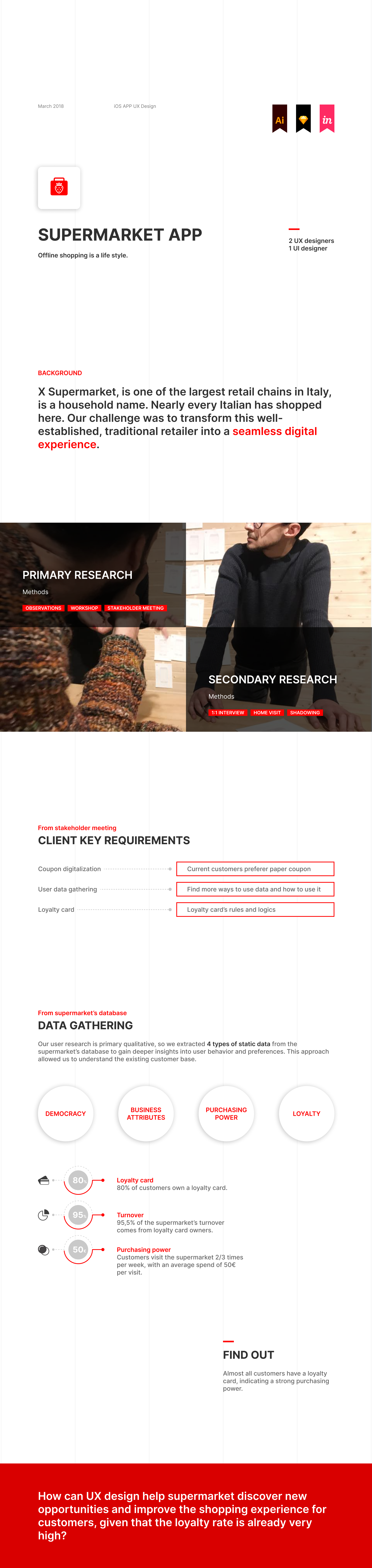
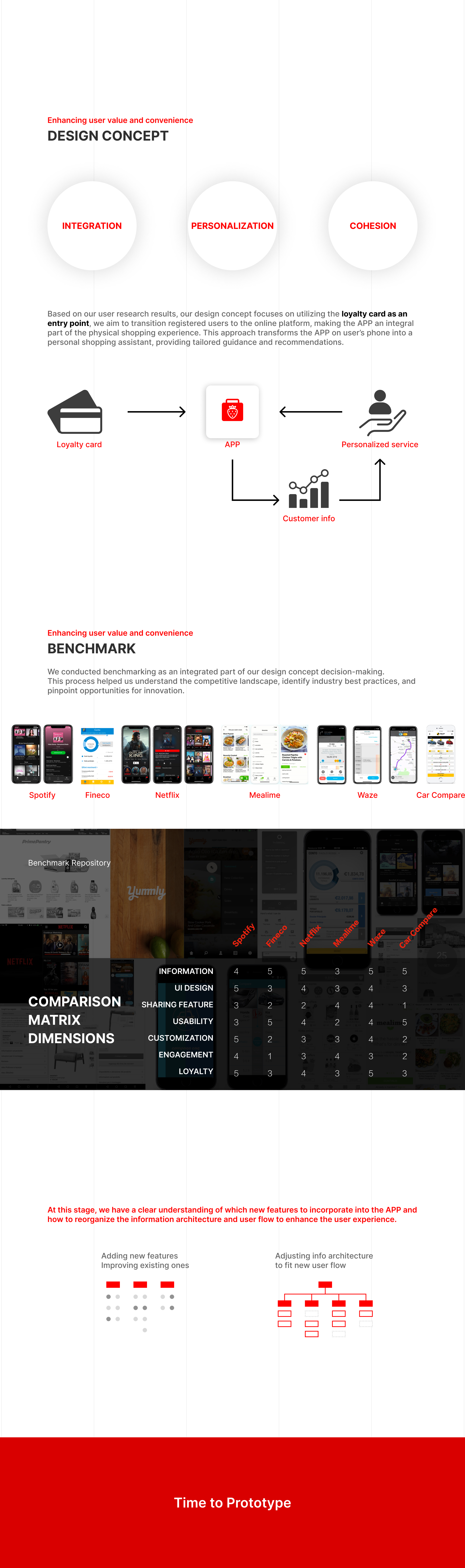
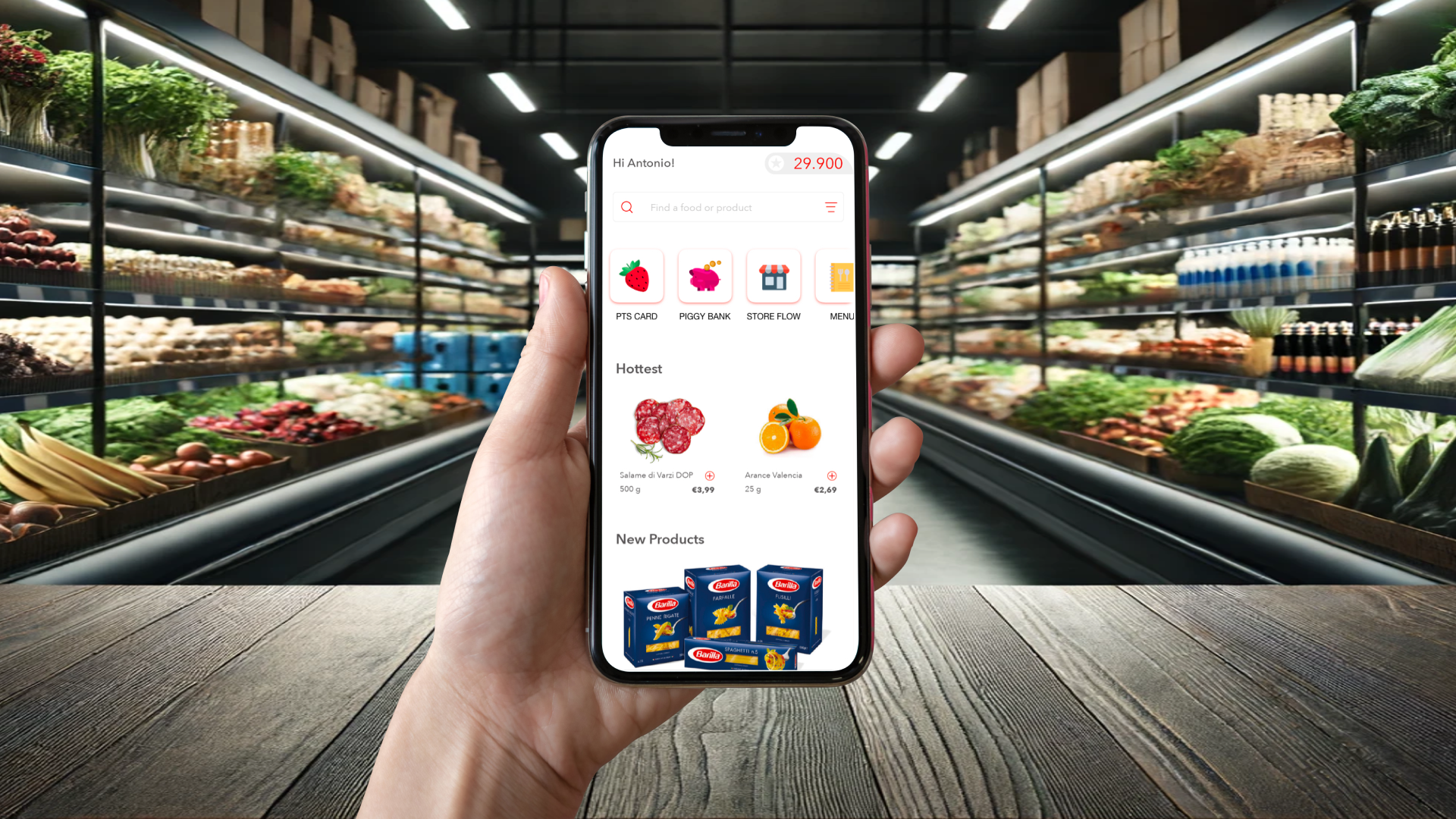
This mobile-app UX project explored how a supermarket could support the way people already shop. I worked on user research and translated the findings into the app’s UX design, with the loyalty card as an entry point into the digital experience.
Role: UX Designer
Research and the design problem
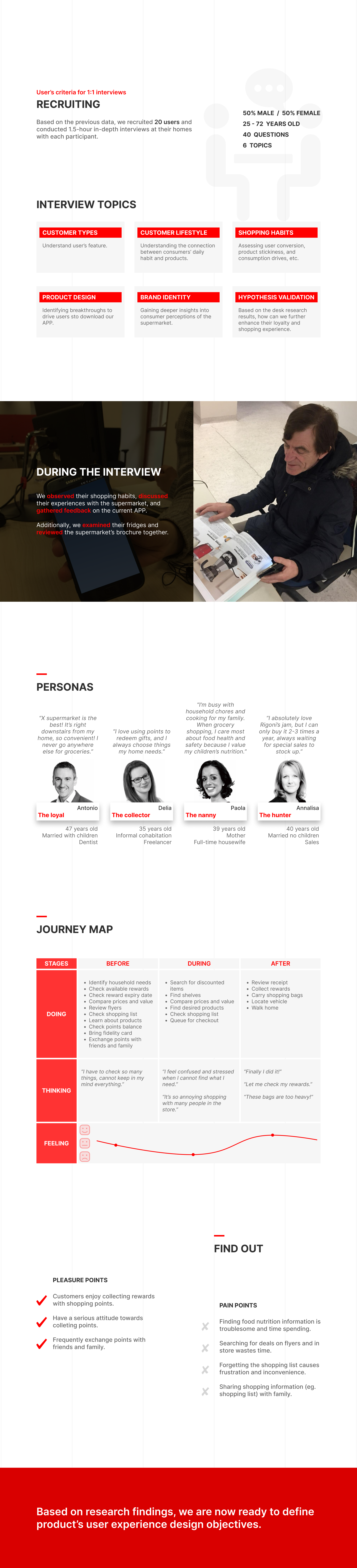
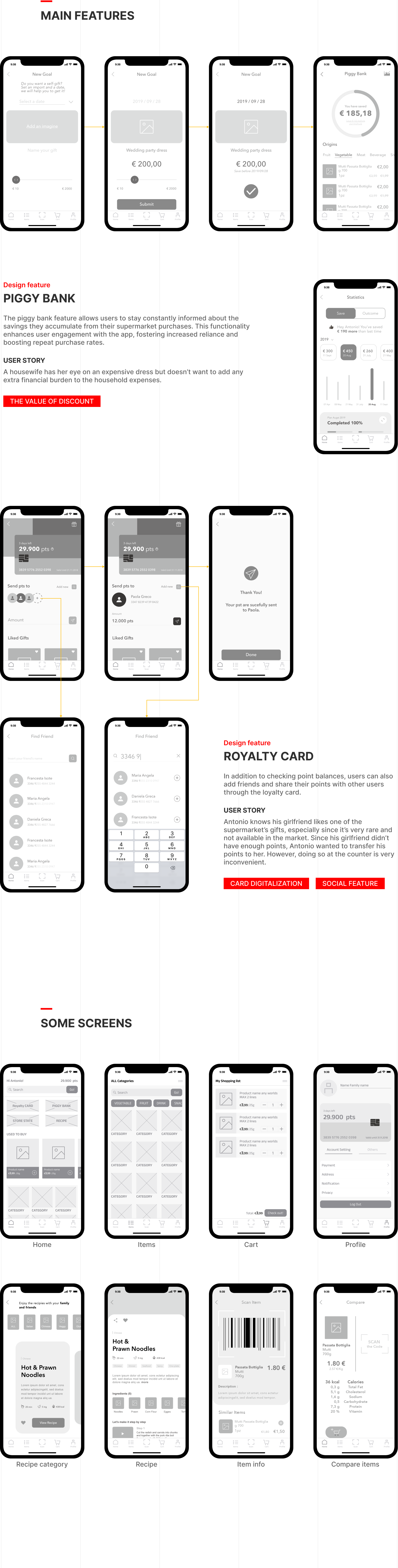
The original case documents observations, stakeholder discussions and home interviews. The team mapped the shopping journey before, during and after a store visit. Recurring difficulties included finding product information, comparing offers, remembering a shopping list and sharing shopping information with family.
The resulting question was how the app could make existing shopping tasks more convenient, rather than simply add another loyalty mechanism.
Design decisions
- Use the loyalty card as a familiar starting point for the app.
- Connect points, rewards and sharing to existing shopping behavior.
- Organize shopping lists, recipes and product comparison around practical tasks.
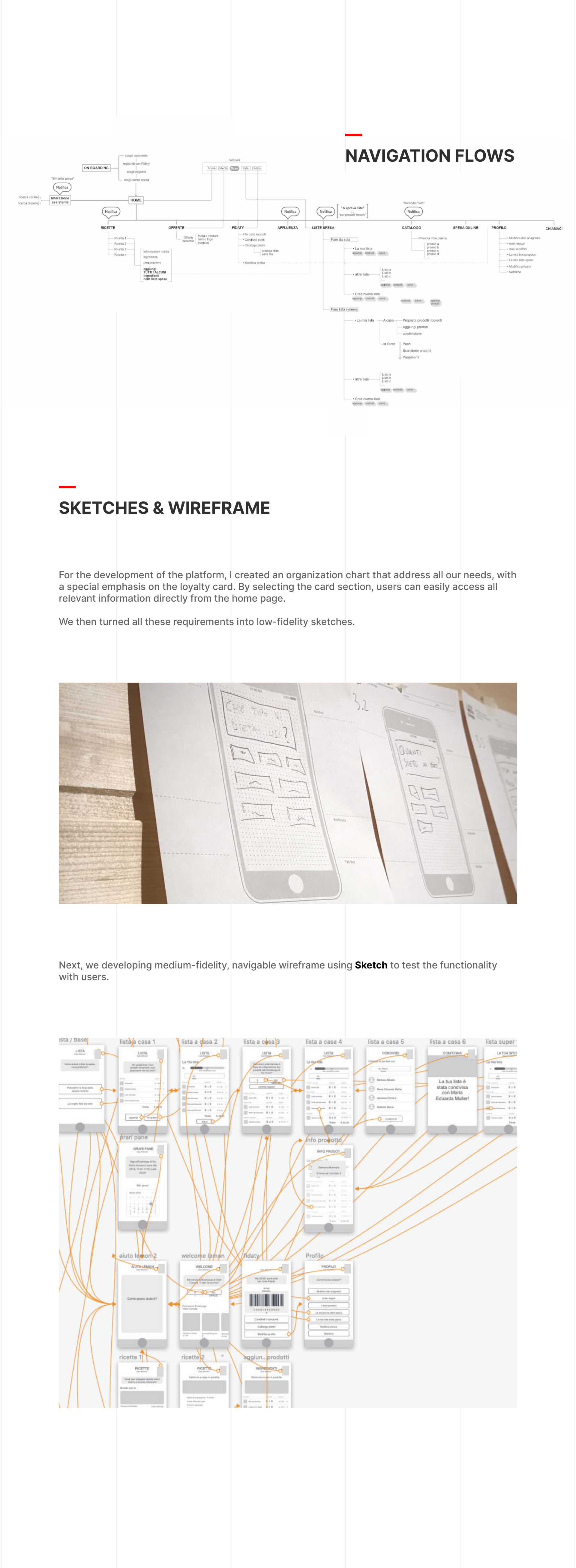
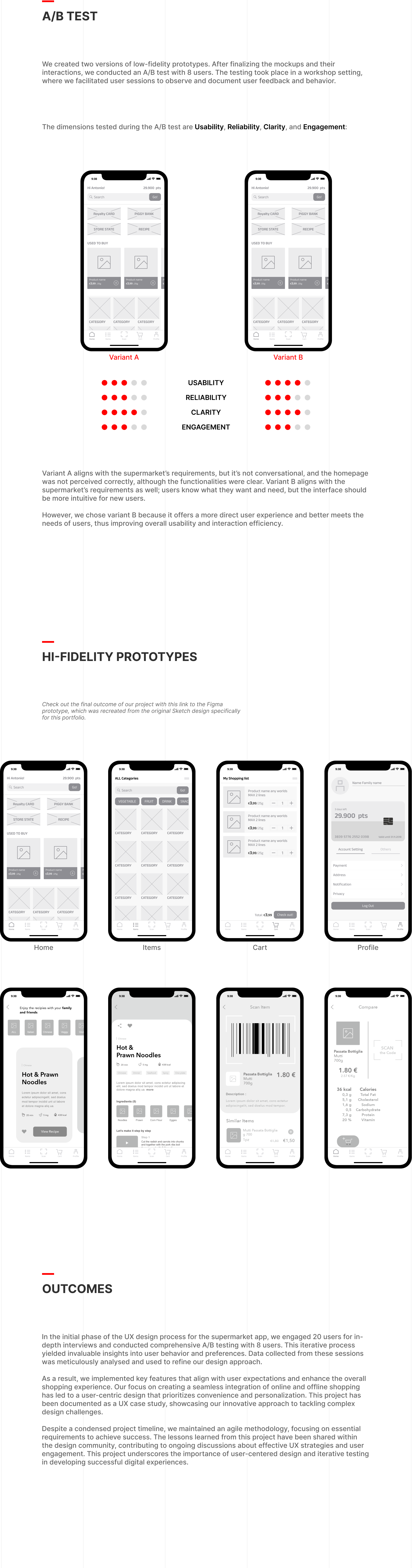
I created the navigation structure with emphasis on the loyalty-card area. The team translated requirements into sketches and navigable Sketch wireframes, then compared two prototype variants in facilitated sessions.
Prototype evaluation
The original report describes a comparison with eight participants. The team selected variant B for its more direct navigation, while noting that new users still needed a more intuitive interface. This is a small prototype study, not evidence of a statistically established uplift or post-launch business impact.
What the case demonstrates
The useful evidence is the link from observed shopping behavior to journey mapping, navigation and prototype decisions. The final deliverable shown is a prototype, with the original Sketch work later recreated in Figma for the portfolio.
Original case presentation
These panels preserve the original project documentation, including its dated wording and figures. They provide supporting detail for the summary above.